
Why Airway Dentistry is the Future of Modern Dentistry
Why Airway Dentistry is the Future of Modern Dentistry
Breathing shapes much more of our health than most people realize. The way air moves through the nose and throat affects sleep, energy, focus, and even facial growth. Instead of treating teeth alone, airway-focused clinicians look at how the jaw, tongue, palate, and dental alignment affect the upper airway. That shift changes prevention, diagnosis, and treatment for patients of all ages.
The Connection Between Oral Structures and The Airway
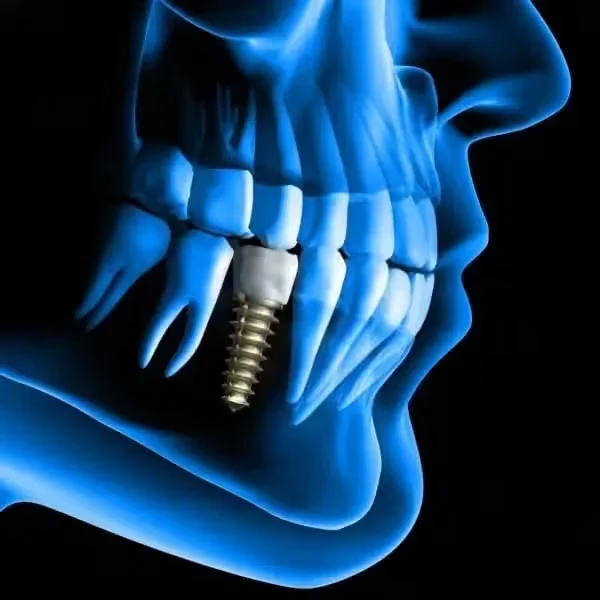
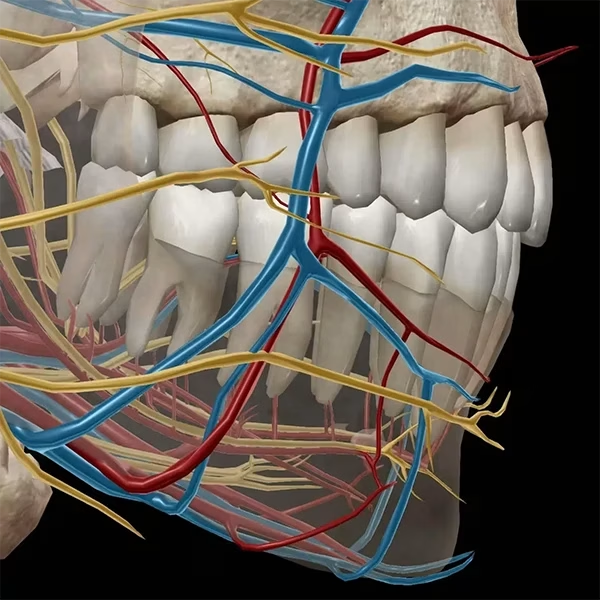
Your jaw, tongue, soft palate, and dental arches form the floor and front walls of the upper airway. When those structures sit in healthy positions, the airway stays open during sleep and wakefulness. When they don’t, the airway narrows and airflow becomes turbulent or interrupted.
A few simple mechanics explain a lot. A retruded lower jaw pulls the tongue backward and reduces space in the throat. A high, narrow palate shrinks the oral cavity and forces the tongue down and back. When the tongue and soft tissues crowd the airway during sleep, breathing can pause or become shallow. These mechanical links show why dentists who assess airway anatomy can spot problems that other clinicians may miss.
Signs That Indicate You May Need Airway Dentistry
Airway problems often show up beyond noisy sleep. Watch for:
- Persistent snoring that gets louder or more regular.
- Choking, gasping, or observed pauses in breathing while asleep.
- Daytime fatigue, brain fog, or poor concentration despite reasonable sleep hours.
- Morning headaches or dry mouth on waking.
- Grinding or clenching teeth, restless sleep, or frequent awakenings.
- In children: mouth breathing, bedwetting, hyperactivity, poor school focus, or stalled facial growth.
These symptoms do not guarantee an airway disorder, but they are red flags worth exploring with a clinician trained in airway health. Long-term mouth breathing in children can change how the jaws and face develop, increasing future airway risk.
Diagnostic Tools and The Evaluation Process
Airway dentist Dubai use a combination of clinical observation and modern imaging to build a full picture. The typical process includes:
- A thorough history focusing on sleep, daytime symptoms, and breathing habits.
- A comprehensive oral exam that evaluates tongue posture, palate shape, jaw alignment, and dental occlusion.
- 3D imaging, such as cone beam computed tomography (CBCT), to visualize airway volume and skeletal relationships.
- Screening questionnaires. Standard tools for evaluation, such as the Epworth Sleepiness Scale, STOP-BANG, or other validated questionnaires, can quickly gauge sleepiness and OSA risk, helping to determine whether further testing is needed.
- Referrals for sleep testing when obstructive sleep apnea (OSA) is suspected. Home sleep apnea tests or full polysomnography provide objective measures of breathing during sleep.
Board-certified in dental sleep medicine, Dr. Rashida Juzar Ali unites CBCT analytics with airway-centric care, linking jaw growth, tongue posture, and function to improve sleep.
Treatment Modalities in Airway Dentistry
Airway dentistry relies on a spectrum of treatments tailored to the patient’s age and anatomy. The least invasive options come first:
- Oral appliance therapy (OAT): Custom devices reposition the lower jaw slightly forward to open the airway during sleep. For many adults with mild to moderate OSA, these appliances reduce breathing events and improve symptoms. OAT often works well when patients cannot tolerate continuous positive airway pressure.
- Orthodontics with airway goals: Expansion of the upper arch and guided growth techniques create more room for the tongue and nose breathing. These approaches matter most in growing children.
- Myofunctional therapy: Exercise-based programs teach better tongue posture and nasal breathing, which support structural changes.
- Surgical collaboration: For selected patients, procedures such as maxillomandibular advancement or ENT surgeries (adenoid or tonsil removal) may be necessary. Airway dentistry focuses on coordinated care so surgery complements dental interventions rather than replacing them.
A thoughtful plan combines therapies and tracks outcomes. The goal is not cosmetic change alone but measurable improvement in breathing, sleep quality, and long-term health.
Airway Dentistry vs. Traditional Dentistry
Traditional dental care focuses primarily on teeth, gums, and the structures immediately around them. Airway dentistry expands that scope. It treats the mouth as part of a system that supports breathing, sleep, and whole-body health. That means screening for sleep-disordered breathing, monitoring facial growth in children, and prioritizing treatments that promote nasal breathing and proper tongue posture.
In practice, an airway dentist still treats cavities and gum disease. The difference lies in the questions they ask and the prevention strategies they use. Instead of seeing a child with narrow arches as a cosmetic case, they may view that presentation as an airway risk to address early.
Pediatric Airway Development: Why Early Care Matters
Children’s faces and airways develop rapidly. Chronic mouth breathing, enlarged adenoids, or persistent nasal obstruction can alter the course of skeletal growth. When the lower jaw fails to develop forward, the airway becomes more vulnerable later in life. Early detection and intervention, orthodontic expansion, habit correction, or timely ENT referral can redirect growth in a healthier pattern.
Targeted pediatric airway care can reduce the likelihood of sleep problems, behavioral issues, and complicated orthodontic needs down the road. That preventive mindset is one reason airway dentistry is gaining traction among clinicians and parents alike.
Future Trends and Innovations
Technology and teamwork drive the future. Advances in 3D imaging, digital airway modeling, and telemedicine let clinicians monitor changes more precisely. Research into the interplay of genetics, sleep physiology, and craniofacial growth will refine which patients benefit from which interventions.
Interdisciplinary collaboration will also grow. Dentists will work more closely with sleep physicians, ENTs, pediatricians, and orthodontics treatment Dubai to deliver integrated care. Teamwork will facilitate earlier diagnosis and timely treatment, improving patient outcomes.
Taking the Next Step
If breathing problems, snoring, or unexplained daytime fatigue affect you or a loved one, consider an airway assessment. LeDenté combines dental expertise with airway evaluation to guide testing and treatment choices. For example, specialist centers like Le Dente offer airway-focused assessments and coordinated referrals for sleep testing and ENT care. Led by one of the highly experienced dentists, Dr. Rashida creates age-specific airway protocols, oral appliances, myofunctional therapy, and guided expansion to reduce snoring, restore nasal breathing, and support healthy pediatric growth.
She authors clinical pieces and lectures regionally on airway-centric orthodontics, oral appliance therapy, and TMJ–sleep pathways, helping teams adopt data-driven protocols for complex breathing and sleep cases.
You can learn more about integrated airway programs at https://www.ledente.com/
FAQs
What is airway dentistry, and how does it differ from traditional dentistry?
Airway dentistry evaluates how oral structures influence breathing and sleep. It still cares for teeth and gums, but it also screens for airway risk, prioritizes nasal breathing, and uses treatments that support airway patency and overall health.
How does airway-focused dentistry improve breathing and overall health?
By correcting jaw position, expanding the palate, improving tongue posture, and offering oral appliance therapy, airway dentistry increases airway space. That leads to fewer breathing interruptions during sleep, better oxygenation, and improved daytime energy and focus.
Who can benefit from airway dentistry treatments?
Adults with snoring or mild to moderate obstructive sleep apnea, children who mouth-breathe or show abnormal facial growth, and patients who grind their teeth can all benefit. Consultation with sleep specialists or ENTs helps determine the best candidates.
What dental procedures are used in airway dentistry to open or support the airway?
Common interventions include oral appliance therapy, orthodontic expansion, myofunctional therapy, and coordinated surgical referrals when needed. Treatment plans prioritize noninvasive options first and escalate only when necessary.
Why is airway dentistry considered the future of modern dental care?
Airway dentistry aligns oral healthcare with systemic health. It offers early prevention, evidence-based interventions, and multidisciplinary care. As research and technology advance, this approach will likely become a standard part of comprehensive dental practice.
Airway health changes lives. When dentists expand their view beyond the teeth, they unlock powerful opportunities to prevent disease, improve sleep, and support lifelong well-being. Airway dentistry moves the field in that direction. If you or a family member struggles with sleep or breathing issues, an airway-focused evaluation could be the most important dental visit you make.